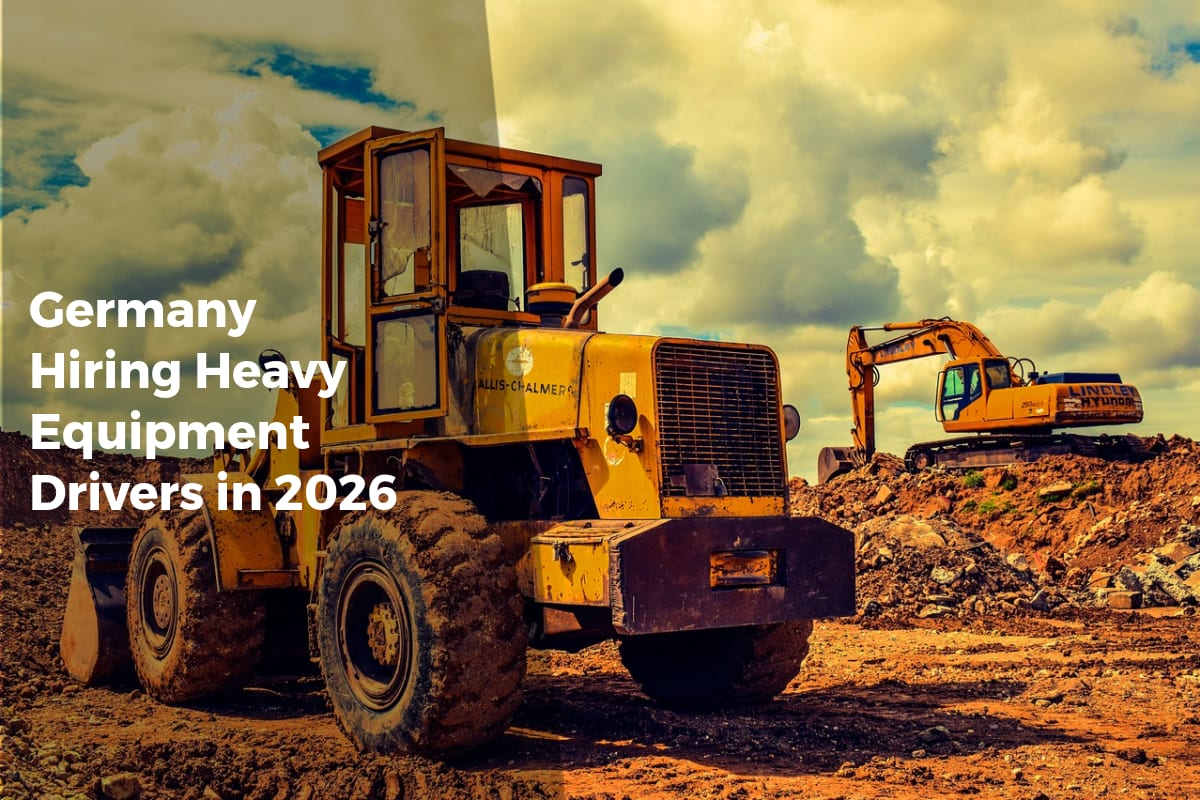
Heavy equipment work in Germany rarely appears under one universal English job title. Employers may advertise for a Baumaschinenführer, Baugeräteführer, Baggerfahrer, Radladerfahrer or Kranführer, depending on the machine and project. That vocabulary matters for US applicants researching construction, logistics, agriculture and infrastructure opportunities in 2026.
The following websites combine specialist job boards with practical resources for checking qualifications, wages, immigration rules and German application standards. Not every site is an English-language job board, but each can clarify a different part of the hiring process.
Table of Contents
(Click to Toggle)
- Why specialist sources matter for equipment operators
- 1. BauJobBörse : Construction-Specific Vacancies
- 2. LKW-Fahrer-gesucht.com : Transport-Focused Listings
- 3. Agrarjobbörse : Agricultural Machinery Roles
- 4. greenjobs.de : Environmental Field Work
- 5. JobMESH : Accessible Regional Searching
- 6. Kimeta : Broad Vacancy Discovery
- 7. BackinJob : Local Employer Listings
- 8. JOBBÖRSE.de : Occupation-Based Research
- 9. EURES : European Labor-Mobility Context
- 10. Make it in Germany : Skilled-Worker Immigration Guidance
- 11. Recognition in Germany : Qualification Recognition
- 12. BERUFENET : German Occupation Definitions
- 13. Entgeltatlas : Regional Wage Evidence
- 14. Europass : European Application Documents
- 15. BAMF : Residence and Integration Rules
- Bonus resources beyond job listings
- Bauforum24 : Machinery and Industry Vocabulary
- VDBUM : Construction Equipment Network
- Hauptverband der Deutschen Bauindustrie : Construction-Sector Intelligence
- Handwerk.de : Skilled-Trades Orientation
- Reading Germany’s equipment-job market realistically
Why specialist sources matter for equipment operators
Equipment roles are spread across civil engineering, demolition, road construction, recycling, warehouses, farms and municipal services. A general search can miss vacancies written around a machine name rather than an occupation. Useful German terms include Bagger for excavator, Radlader for wheel loader, Planierraupe for bulldozer and Baumaschinen for construction machinery.
US credentials do not automatically translate into German authorization. Employers may also expect documented experience, safety training, the correct driving-license category and enough German for site instructions. These sources help separate job discovery from qualification and immigration research.
1. BauJobBörse : Construction-Specific Vacancies
What it is: A German employment site centered on construction occupations and employers.
Category: Specialist job board
Why it stands out:
- Its industry focus reduces unrelated search results.
- German machine and trade terminology appears in context.
Best for: Finding excavator, roadwork and construction-equipment roles by region.
2. LKW-Fahrer-gesucht.com : Transport-Focused Listings
What it is: A niche German board for commercial driving and transport employment.
Category: Driver job board
Why it stands out:
- Some employers combine vehicle driving with loading or machinery duties.
- Listings reveal common license and route requirements.
Best for: Operators whose experience includes trucks, dump vehicles or construction transport.
3. Agrarjobbörse : Agricultural Machinery Roles
What it is: A job resource serving Germany’s farming and agricultural sectors.
Category: Agricultural employment
Why it stands out:
- It reaches work involving tractors, harvesters and loaders.
- Rural vacancies may use occupational terms absent from construction boards.
Best for: Machinery operators with farming, land-management or seasonal experience.
4. greenjobs.de : Environmental Field Work
What it is: A German board for environmental, conservation and sustainability-related employment.
Category: Green-sector jobs
Why it stands out:
- Relevant employers can include forestry, recycling and landscape operations.
- Some field positions involve specialized mobile machinery.
Best for: Operators exploring recycling, land restoration or environmental services.
5. JobMESH : Accessible Regional Searching
What it is: A German employment search site covering skilled, practical and entry-level work.
Category: Job search engine
Why it stands out:
- Searches can be narrowed with German equipment terms.
- Its coverage extends beyond major metropolitan areas.
Best for: Comparing operator vacancies across German towns and industrial regions.
6. Kimeta : Broad Vacancy Discovery
What it is: A Germany-focused search engine that gathers employment listings from multiple sources.
Category: Job aggregator
Why it stands out:
- Machine names can uncover listings with unconventional titles.
- Location filters help identify regional construction clusters.
Best for: Running several searches for excavators, cranes, loaders and plant operations.

7. BackinJob : Local Employer Listings
What it is: A German employment portal with jobs, apprenticeships and regional search pages.
Category: General job board
Why it stands out:
- It provides another route to smaller regional employers.
- Apprenticeship results can explain Germany’s training pathways.
Best for: Newcomers comparing direct vacancies with formal vocational routes.
8. JOBBÖRSE.de : Occupation-Based Research
What it is: A German portal offering vacancies and occupation-oriented career information.
Category: Employment portal
Why it stands out:
- Occupation pages provide useful German search vocabulary.
- Related titles can reveal adjacent machinery roles.
Best for: Building a wider search around Baugeräteführer and similar occupations.
9. EURES : European Labor-Mobility Context
What it is: The European employment network providing vacancies and country-level labor information.
Category: Public employment resource
Why it stands out:
- Germany profiles explain living and working conditions.
- Its guidance distinguishes EU mobility from non-EU immigration.
Best for: Understanding how nationality affects the employment process.
10. Make it in Germany : Skilled-Worker Immigration Guidance
What it is: Germany’s official information portal for international skilled workers.
Category: Immigration and career guidance
Why it stands out:
- It explains visas, vocational qualifications and employment rules.
- English-language material is available for overseas readers.
Best for: US applicants checking whether a prospective role supports a legal work pathway.
11. Recognition in Germany : Qualification Recognition
What it is: An official portal for assessing foreign professional qualifications in Germany.
Category: Credential guidance
Why it stands out:
- Its recognition finder identifies responsible authorities.
- It explains regulated and non-regulated occupations.
Best for: Determining how US training records may be evaluated.
12. BERUFENET : German Occupation Definitions
What it is: The Federal Employment Agency’s detailed database of German occupations and training profiles.
Category: Career reference
Why it stands out:
- Profiles describe duties, workplaces and qualification routes.
- It clarifies the difference between related operator titles.
Best for: Translating experience into terminology German employers recognize.

13. Entgeltatlas : Regional Wage Evidence
What it is: An official database showing earnings data for occupations in Germany.
Category: Labor-market research
Why it stands out:
- Results can be compared by occupation and region.
- Official data provides context for evaluating a job description.
Best for: Researching compensation patterns without relying on isolated advertisements.
14. Europass : European Application Documents
What it is: A European service for presenting skills, qualifications and employment history.
Category: Application preparation
Why it stands out:
- Its structure helps organize licenses and machine competencies.
- Documents can be prepared in European-style formats.
Best for: Applicants converting US experience into a clearly structured skills record.
15. BAMF : Residence and Integration Rules
What it is: Germany’s Federal Office for Migration and Refugees information website.
Category: Government guidance
Why it stands out:
- It covers residence, language and integration topics.
- Official explanations help verify third-party immigration claims.
Best for: Checking broader requirements connected to living and working in Germany.
Bonus resources beyond job listings
Bauforum24 : Machinery and Industry Vocabulary
What it is: A German construction-machinery publication and industry community.
Category: Trade media
Why it stands out:
- Machine reports expose readers to current German terminology.
- Industry coverage provides context around equipment and contractors.
Best for: Learning the language used inside Germany’s machinery sector.
VDBUM : Construction Equipment Network
What it is: A professional association serving construction machinery, environmental technology and related fields.
Category: Industry association
Why it stands out:
- Its subject areas reflect real equipment specializations.
- Industry information helps identify relevant employer segments.
Best for: Mapping the professional ecosystem around mobile machinery.
Hauptverband der Deutschen Bauindustrie : Construction-Sector Intelligence
What it is: Germany’s main construction-industry federation.
Category: Trade association
Why it stands out:
- Sector reports show where construction activity is developing.
- Member and regional structures help explain the employer landscape.
Best for: Researching civil engineering and infrastructure sectors before searching.
Handwerk.de : Skilled-Trades Orientation
What it is: An information portal for Germany’s skilled-trades sector.
Category: Vocational career resource
Why it stands out:
- It explains Germany’s apprenticeship-centered employment culture.
- Trade profiles reveal adjacent technical career paths.
Best for: Newcomers unfamiliar with German vocational qualifications.
Reading Germany’s equipment-job market realistically
A vacancy labeled “driver” may involve much more than operating a machine. Routine inspection, minor maintenance, loading, site documentation and strict safety communication can all be part of the role. Requirements also vary by machine, employer and federal state.
The most reliable research method is to combine specialist listings with official occupation, recognition and immigration sources. Search in German, document each machine operated, record relevant licenses and avoid assuming that US credentials transfer automatically. That approach produces a clearer view of Germany’s 2026 heavy-equipment market than any single job board can provide.